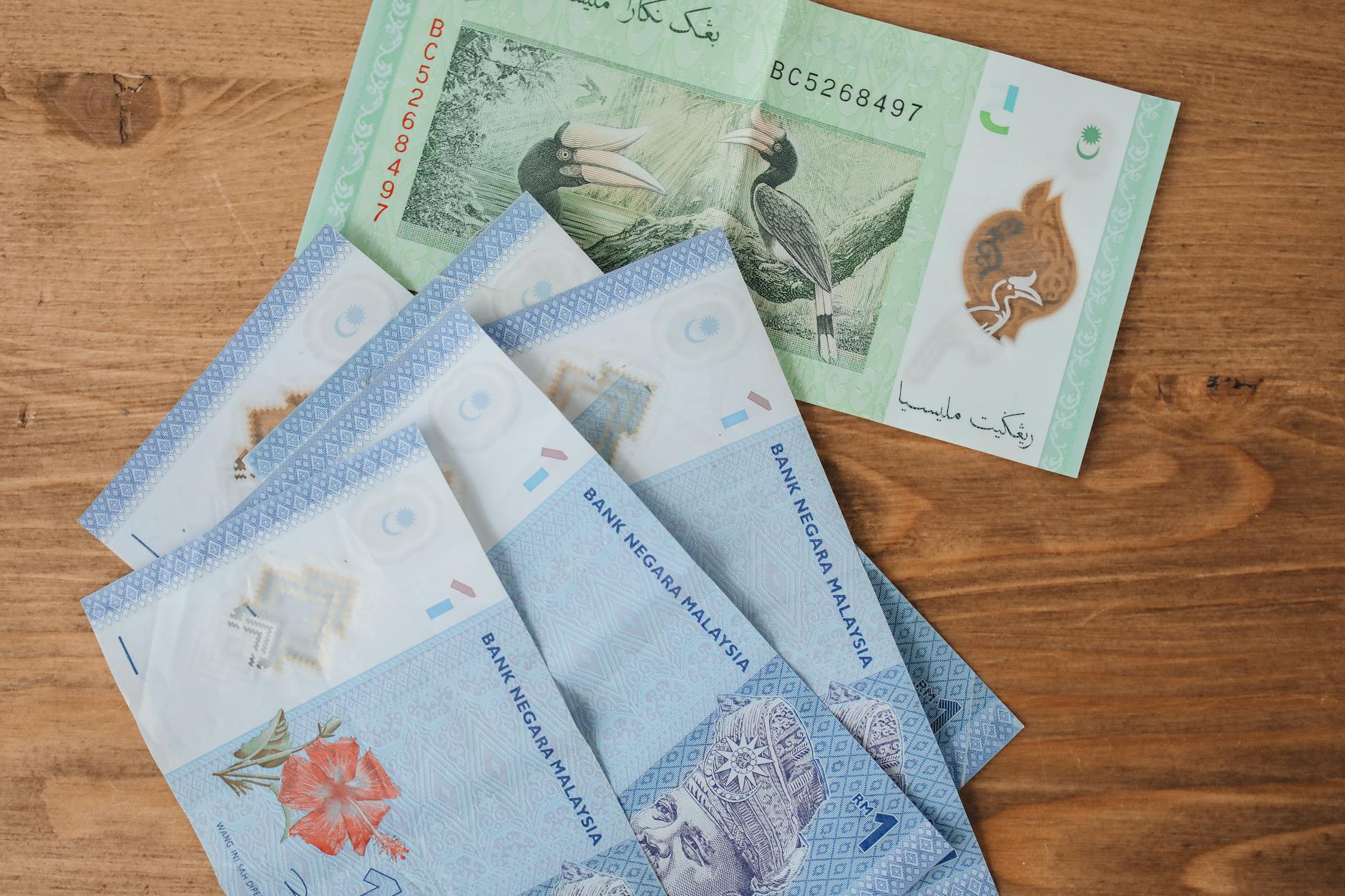
For a Malaysian household, the decision to study abroad is rarely spontaneous. It usually begins with a parent tallying up tuition fees in Ringgit, wondering if spending RM400,000 to RM600,000 on a three-year degree is a rational move or an emotional one. The anxiety is understandable: depreciation of the Ringgit has made the cost of living in Australia steeper than it was a decade ago. Yet Australian universities remain among the most popular destinations for SPM, STPM, and UEC leavers. The question has shifted from “Can I get in?” to “Is the return on investment still defensible?”
This article puts numbers behind that question. We analyse the total cost of study abroad in 2026, break down new immigration frameworks that affect Malaysian students specifically, and compare starting salaries against total education debt. The goal is not to push you toward or away from Australia, but to make the calculation clear enough that you can explain it to your parents.
The Real Cost of Studying Abroad: 2026 Tuition Benchmarks for Malaysian Students
The sticker price of an Australian degree varies wildly by institution, discipline, and city. In 2026, undergraduate business programs at Group of Eight (Go8) universities sit between AUD $45,000 and AUD $52,000 per year. Engineering and IT programs often hit AUD $48,000 to AUD $55,000 annually. Private colleges and non-Go8 institutions offer more moderate ranges of AUD $28,000 to AUD $38,000, but the trade-off in global ranking points is real.
When you convert these figures into MYR at a rate of approximately 2.90, a three-year Bachelor of Commerce can cost anywhere from RM 390,000 to RM 450,000 in tuition alone. A four-year engineering degree pushes the number past RM 550,000. These are not small sums for a Kuala Lumpur or Penang family. What often goes unnoticed is that Australian universities have begun offering “Global Future Scholarships” and automatic bursaries specifically for Southeast Asian applicants. Some institutions deduct 15 to 20 percent off the listed international fee if the student meets a certain academic threshold — not a headline grant, but a quiet discount buried in the offer letter. Malaysian applicants who apply through registered education agents in Klang Valley or Johor are sometimes flagged for these automatically, whereas direct applicants may miss them.
Living Expenses in Sydney vs Melbourne vs Adelaide: Where Your Ringgit Goes Further
The choice of city is arguably more consequential than the choice of university. Sydney remains the most expensive city for international students in the country. The Department of Home Affairs updated its financial capacity guidelines in 2025, now requiring evidence of AUD $29,710 per year for living costs for a single student. That figure is an audit requirement, not a budget. Realistic spending in Sydney, including rent, public transport, and groceries, sits closer to AUD $38,000 to AUD $42,000 per year. In Melbourne, that range drops to AUD $34,000 to AUD $38,000. Adelaide, Perth, and Hobart can be managed for AUD $28,000 to AUD $33,000.
For Malaysian students, rent is the single largest variable. A shared apartment in Burwood or Campsie within a 30-minute train ride of the University of Sydney may cost AUD $350 to AUD $450 per week for a room. In Mawson Lakes near the University of South Australia in Adelaide, a comparable room goes for AUD $190 to AUD $250. Over three years, the difference between studying in New South Wales and South Australia can exceed RM 120,000. The Direction No. 111 visa processing hierarchy also indirectly favours non-metropolitan campuses, which means students willing to study in Adelaide, Brisbane, or Perth often experience faster visa turnaround. This is a material factor for families anxious about application timelines.
The Graduate Job Market: How Malaysian Degree Holders Price Themselves After Studying Abroad
A degree is a capital asset, and its value is determined by the earnings it unlocks. In Australia, the median starting salary for an international business graduate at a mid-tier firm in Melbourne is around AUD $62,000 to AUD $68,000. Engineering graduates start at AUD $72,000 to AUD $82,000. IT graduates who land roles in the banking or consulting sectors often see packages in the AUD $80,000 to AUD $95,000 range.
However, an Australian opening salary does not translate one-to-one when a Malaysian student returns to Kuala Lumpur or Selangor. Employers in Malaysia do not automatically map an overseas degree to a premium salary band. Data from graduate recruitment panels in Klang Valley suggests that a Malaysian with an Australian accounting degree entering a Big Four firm typically starts at RM 3,800 to RM 4,500 per month. An engineering graduate entering a semiconductor firm in Penang or Kulim might see RM 3,500 to RM 4,200. The wage premium for studying abroad has narrowed significantly compared to a decade ago, partly because the supply of returning overseas graduates has increased. The differentiator is now work experience: students who complete at least two years of full-time employment in Australia under the Temporary Graduate visa (subclass 485) and then return to Malaysia command salaries 30 to 50 percent higher than fresh overseas graduates without local work experience. The post-study work period has become the real value lever in the study abroad equation.
Subclass 500 and Post-Study Work Rights: What the 2026 Immigration Framework Means for Malaysians
Australia’s student visa landscape shifted in 2025 in ways that directly affect applicants from Malaysia. The Genuine Student (GS) requirement replaced the old GS questionnaire, and the assessment is now more granular. A Malaysian applicant with a clear academic trajectory — SPM to a Foundation program or STPM/UEC to a direct Bachelor’s — faces relatively low scrutiny if the chosen course aligns with prior study. Applicants proposing a major pivot, such as a UEC science stream student suddenly enrolling in a Diploma of Business, attract more questions. The financial capacity proof is also being enforced more uniformly. Providing bank statements in a parent’s name without a clear affidavit of support remains a common reason for RFI (request for further information) delays specific to Malaysian applicants.
The Temporary Graduate visa (subclass 485) post-study work stream has undergone further recalibration. For a Bachelor’s degree completed in a metropolitan campus, the stay-back period is now two years. For regional campuses classified as Category 2, the period extends to three years. This means a Malaysian student who completes a degree at the University of Newcastle or Deakin’s Geelong campus gains an additional year of work rights compared to a peer who studied in central Sydney. That extra year translates into approximately AUD $65,000 to AUD $80,000 of gross earnings, which directly offsets a significant portion of the initial cost of studying abroad. Families doing the math should treat the total eligible work duration as part of the cost-recovery timeline, not as an optional add-on.
Long-Term Return on Investment: When Does the Math Actually Flip Positive?
Let us construct a realistic financial model. Assume a Malaysian student completes a three-year Bachelor of Commerce at a Go8 university in Melbourne. Total tuition: AUD $135,000. Living costs over three years: AUD $105,000. Total outlay before part-time earnings: AUD $240,000, or approximately RM 696,000. The student works part-time during the semester and full-time during breaks, earning an average of AUD $18,000 per year. Net parental contribution after part-time income: roughly AUD $186,000, or RM 539,400.
After graduation, the student secures a two-year 485 visa and works in a graduate accounting role at AUD $64,000 per year. Living expenses during the work period are self-funded. Total gross earnings over two years: AUD $128,000. If the student saves 20 percent of post-tax income, approximately AUD $20,000 to AUD $25,000 can be set aside. The intangible asset is the Australian work experience itself. Returning to Malaysia after two years of audit or advisory experience in a credible firm in Australia positions the graduate not as a fresh entrant but as an experienced hire. The salary uplift in the Malaysian market for that profile ranges from RM 1,500 to RM 3,000 per month above the fresh-graduate baseline, depending on the sector and firm.
The break-even calculation is sensitive to assumptions about the Ringgit exchange rate and whether the student returns immediately or stays in Australia longer. For a student who works the full two years of the 485 visa, the net financial gap narrows substantially. The career trajectory, rather than the immediate salary differential, is where the long-term payback sits. A Big Four-trained auditor from Australia moves up the salary bands in Malaysia faster than a local-university peer who did not have overseas work exposure. This acceleration, compounded over five to seven years, is the real reason families continue to choose to study abroad despite a weaker Ringgit.
Frequently Asked Questions About Studying Abroad in Australia for Malaysians
How much does it really cost to study abroad in Australia from Malaysia in 2026?
The total cost, including tuition, living expenses, and health cover, for a three-year degree ranges from AUD $180,000 to AUD $280,000, depending on the university ranking and the city. Part-time work can offset a portion of this, but the net parental outlay typically remains above RM 400,000.
Is studying abroad in Australia still worth it if I plan to return to Malaysia?
Yes, if structured correctly. The value now rests less on the degree certificate itself and more on whether you secure full-time work experience in Australia before returning. Graduates with two or more years of Australian work experience command a tangible salary premium in the Malaysian job market, particularly in finance, engineering, and technology.
Which Australian cities are most affordable for Malaysian students who want to study abroad?
Adelaide, Perth, Hobart, and regional centres like Geelong and Newcastle offer lower rent and living costs than Sydney and Melbourne. The cost differential over three years can exceed RM 100,000. These locations also qualify for extended post-study work rights under current immigration settings.
Can Malaysian students work while studying abroad in Australia?
Yes. The student visa (subclass 500) permits up to 48 hours of work per fortnight during academic terms and unlimited hours during scheduled breaks. Earnings from part-time work can cover a significant share of living expenses, but planning to fund tuition through part-time work alone is unrealistic.
What are the biggest financial mistakes Malaysian families make when planning to study abroad?
The most common error is under-budgeting for the second and third years, assuming tuition fees remain frozen and rent will not rise. Australian universities typically increase international student fees annually. The second error is treating the Australian income solely as a cost offset rather than as a career accelerant; post-study work is the bridge to a higher salary tier back in Malaysia.
Weighing the Financial Logic Against the Career Trajectory
The decision to study abroad in Australia is not easily reduced to a spreadsheet. A family that measures the investment purely in Ringgit terms over a three-year horizon will likely conclude that the numbers are hard to justify. That conclusion would be fair, and for many households, it may be the right one. However, the payback for this particular form of study abroad reveals itself over a longer arc: the professional network built in Melbourne or Brisbane, the work habits shaped by a different regulatory and commercial environment, and the signal that an Australian degree plus local work experience sends to employers in the ASEAN market. The arithmetic is tight, and families who proceed should do so with a clear cost-recovery plan that centres on the post-study work period as the non-negotiable second phase of the overall education strategy.
Partner links. Using them costs you nothing extra and may earn us a commission.